01
Botanical gardens
Glass roofs, hard midday light, and a canopy that eats it.
Guide-ID · Deventer, NL
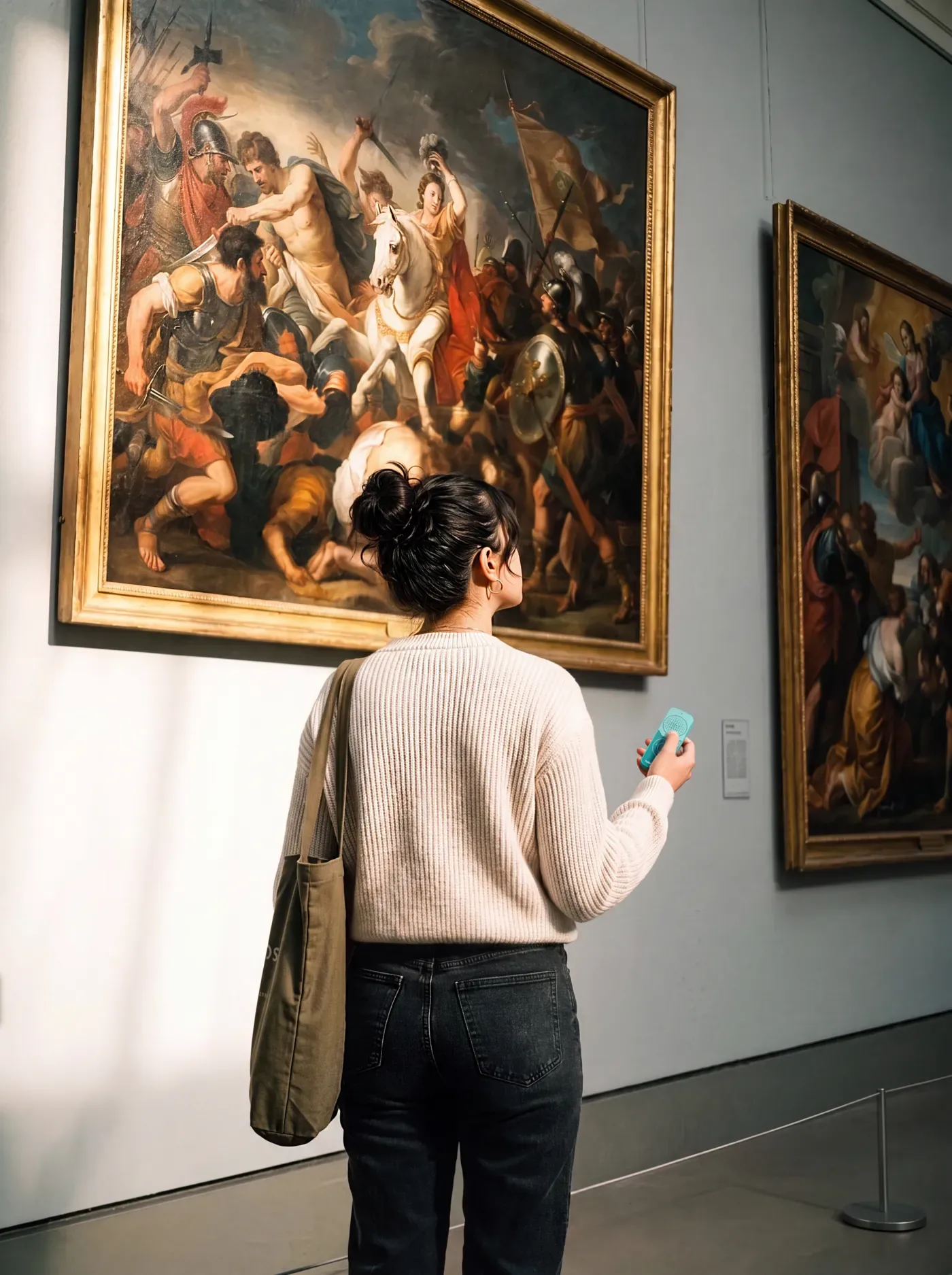
They could not photograph their product in working museums and zoos. We gave them 23 images across five kinds of venue, with no crew in any of them.
Three sends · June to August 2026
The problem
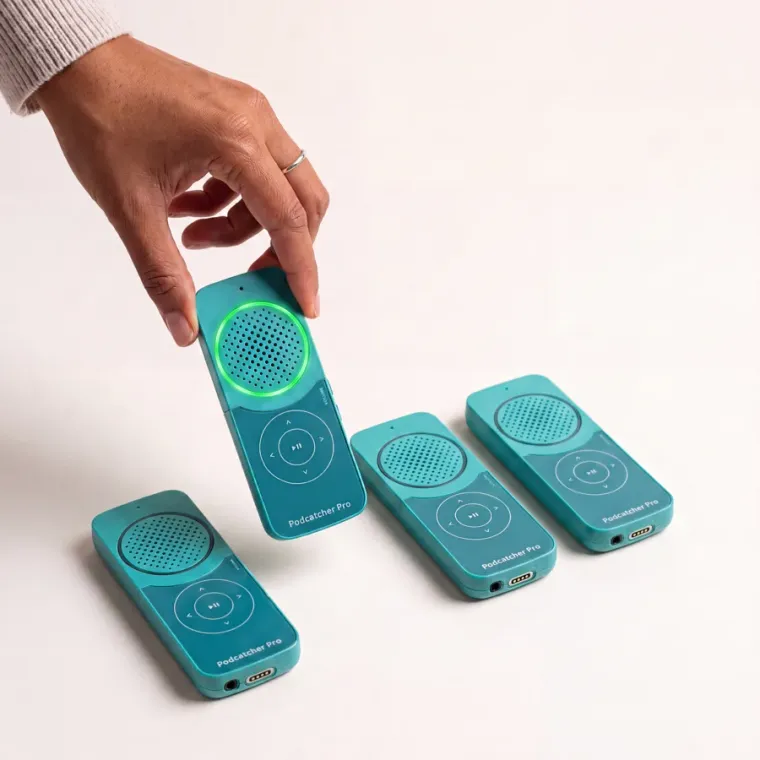
Guide-ID makes the Podcatcher Pro, a handheld audio guide. It is used in museums, zoos, castles and botanical gardens, across several countries.
Those are working venues, open to the public. You cannot walk a crew, talent and lighting into them for a photograph, and doing it properly across every kind of venue is a six-figure production.
So they came to us with a list.
The brief
13 images for web and social.
images for web and social
The approach
We went fully AI on this job. That is not the same as plug and play.
First we analysed their brand and the photography they already had. Then we tested shot types until we knew which ones held up and which fell apart.
It is important to know where the tool gets it wrong. We focused on the product: its proportions, its buttons, the way a hand actually holds it. Every frame was measured against the real device — 5 × 13 × 1.7 cm, two and a half times taller than it is wide — and corrected by hand where it came out wrong.
Because of that, we can guarantee the product is right in every image. The tool renders. A person decides when it is ready.
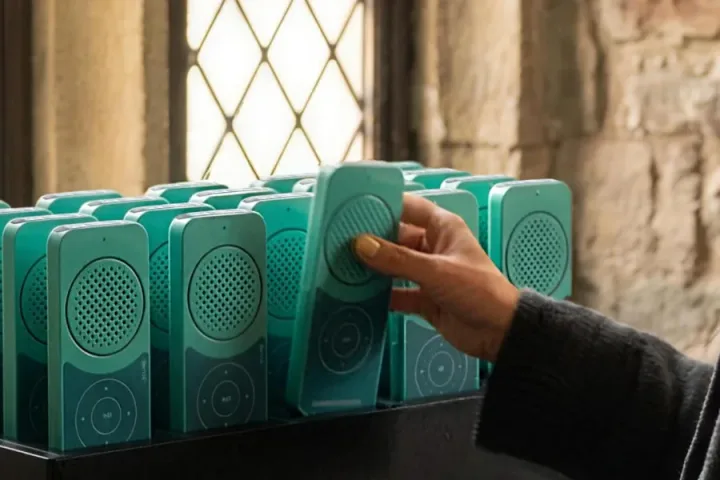
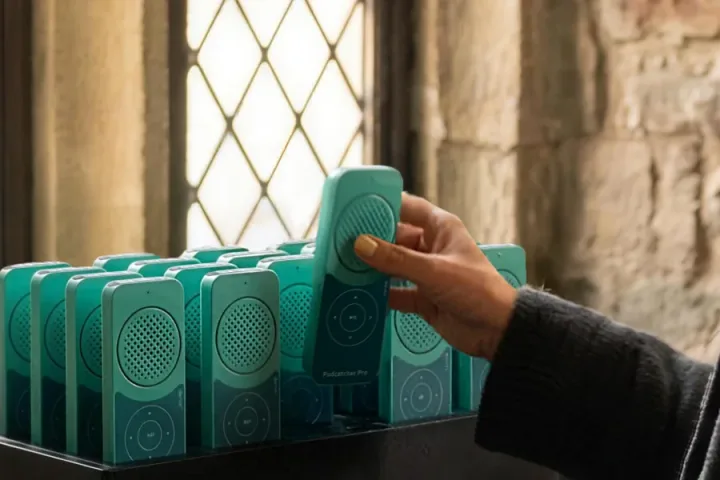
The images are realistic enough that, at first glance, it’s not immediately apparent that they were AI-generated.
The work
Each location needed its own light, architecture and kind of visitor. None of them is one set dressed five ways.
Glass roofs, hard midday light, and a canopy that eats it.
Gilt frames, dark walls, low light. Recognisably a museum, and no real one.
Outdoors, moving animals, families. The only world where the visitor is a child.
Stone and leaded glass. Scale is the point, so the device has to stay readable.
Staff rather than visitors: handing the devices out, and building the tour on the portal.
Afterwards
I was impressed by how realistic the images turned out to be. They exceeded my expectations of what AI-generated imagery could achieve.
Mind if we measure your visit?
Google Analytics, the Meta pixel and Microsoft Clarity show us how pages are read and which ads work. They set cookies. We would like to use Google Analytics to see which pages people read and how they found us, the Meta pixel to see which of our Instagram and Facebook ads brought you here and to show our ads again to people who visited, and Microsoft Clarity to see how people scroll and click through a page (it records the visit, with anything typed into a form hidden). These set cookies and send the visit to Google, Meta and Microsoft. Without cookies we only count, anonymously, which parts of a page are seen. Saying no changes nothing about what you can read here. Privacy statement